
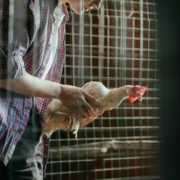
Backyard Chickens and Community Good

There’s a moment every backyard chicken keeper knows well. You open the nesting boxes in the morning and find more eggs than you expected. Your fridge is already full. Your neighbors have politely declined for the third time this week. Your kids have eaten eggs every way imaginable.

What do you do with the rest?

For a growing number of chicken keepers, the answer is simple: donate them. And the impact of that simple decision, multiplied across a community of people with active backyard flocks, is more significant than most people realize.

The Scale of Backyard Chickens in America

Backyard chicken keeping has grown substantially over the past fifteen years. What was once a niche homesteading pursuit has become a mainstream hobby, driven by interest in fresh food, sustainability, and self-sufficiency. Millions of American households now keep small flocks.

A small flock of five or six hens can easily produce four to five dozen eggs per week during peak laying season. Even accounting for household consumption, many keepers find themselves with a consistent surplus.

That surplus, in the aggregate, represents an enormous potential resource for hunger relief. Eggs that would otherwise be composted or given away randomly can instead be directed with purpose to families who genuinely need them.

Why Chicken Keepers Are Uniquely Positioned to Help

Unlike most donors, backyard chicken keepers don’t have to open their wallets to make a contribution. The eggs are already being produced. The cost is already being absorbed. Donating the surplus is simply a matter of redirecting something you already have toward someone who needs it.

This makes chicken keepers an unusually efficient source of food donations. The marginal cost of donating your excess eggs is essentially zero. The impact on the receiving family is very real.

There’s also a quality dimension worth noting. Backyard eggs, from hens with space to roam and varied diets, often have richer yolks, stronger shells, and better flavor than commercial eggs. Families receiving donated backyard eggs are getting something genuinely good.

How It Works in Practice

Donating backyard chicken eggs through Egg Posse is designed to be as simple as possible. You reach out, we coordinate, and your eggs get to someone who needs them. The full step-by-step process is explained in How to Donate Eggs from Your Backyard Chickens.

Many chicken keepers who start with a one-time donation end up establishing a regular pickup cadence. This works well for everyone. The keeper gets reliable relief from egg overflow. The families we serve get a consistent supply of fresh protein. The relationship between donor and organization becomes something more like a partnership.

Building Community Through Backyard Chickens Eggs

There’s something worth appreciating about the specific nature of this kind of giving. Eggs from a local backyard flock aren’t an abstraction. They came from chickens a few miles away, kept by someone who chose to share what they had.

That’s a form of community that operates at a human scale. It’s neighbor feeding neighbor, even when they’ve never met.

For more on the nutritional value of what you’re contributing, read Eggs vs. Other Food Bank Staples: Why Protein Is the Biggest Gap in Hunger Relief. And to understand the broader mission this giving supports, start with Why Eggs Are the Most Underrated Weapon in the Fight Against Hunger.

If you have backyard chickens and more eggs than you need, reach out to Egg Posse today. Your chickens are already doing the work. You just need to point it in the right direction.

How to Make a Small Donation to Fight Hunger

Most people who care about hunger don’t think of themselves as donors. They assume that meaningful giving requires a significant check, a level of financial cushion they may not have, or a formal connection to the philanthropic world.

None of that is true. A small donation to fight hunger, directed at the right place, can have a direct and measurable impact on a real family in your community.

Why Small Donations Matter More Than You Think

The math on hunger relief through eggs is remarkably favorable for small donors.

A typical dozen eggs costs between two and four dollars when purchased in reasonable quantities. That means a ten dollar donation can put two to three dozen eggs in the hands of families who need them. For a household with children, that’s multiple days of high-quality protein.

A twenty dollar donation can stock a family’s refrigerator with enough eggs to make a meaningful difference in their weekly nutrition. This isn’t a rounding error. It’s breakfast, dinner, and snacks for real people.

When you donate to an organization like Egg Posse, where the donation goes directly to purchasing and distributing a specific food item, the connection between your giving and its outcome is unusually clear. There’s no mystery about impact.

Choosing Where Your Donation Goes

Not all hunger charities operate the same way, and it’s worth understanding where your money goes before you give.

Some large hunger organizations have significant administrative costs. Others primarily fund advocacy or research rather than direct food distribution. These can all be legitimate uses of donated funds, but if your goal is to put food directly on someone’s table, you want to know that’s what’s happening.

Egg Posse’s model is direct. Donations buy eggs. Eggs go to families. You can read exactly how that works in What Happens to Your Egg Donation? A Behind-the-Scenes Look at Egg Posse.

Making Your Giving a Habit

One of the most powerful shifts a small donor can make is moving from one-time giving to recurring giving. A small monthly donation, even five or ten dollars, creates a reliable resource that an organization can plan around.

Hunger doesn’t take a month off. Consistent support allows consistent distribution. If you can set up a recurring donation, even a modest one, you’re providing something more valuable than a larger one-time gift: dependability.

Beyond Cash: Other Ways to Give Without Big Spending

If cash is tight, there are still ways to contribute meaningfully.

If you keep backyard chickens, donating excess eggs costs you nothing beyond the time to make a phone call. If you have time rather than money, volunteering for local hunger relief organizations puts real labor toward the problem. If you have neither, sharing information about resources like Egg Posse with someone who needs them is a zero-cost act that can change someone’s week.

For more ideas, read 5 Ways to Help End Local Hunger Without Leaving Your Zip Code.

Start Small. Start Now.

The most common mistake in charitable giving isn’t giving too little. It’s waiting until the conditions feel right to give anything at all. The conditions will never be perfect. But a family in your community is hungry today.

A small donation to fight hunger, made right now, is worth more than a larger one you’ll get around to eventually.

Donate to Egg Posse today and see exactly what your contribution becomes.

Eggs vs. Other Staples: The Protein Gap In Food Banks

Walk into most food bank warehouses and you’ll see the same picture. Stacked cans of soup and vegetables. Bags of dried beans and rice. Boxes of pasta. Bottles of cooking oil. These items are donated with genuine good intentions, and they absolutely serve a purpose.

But they don’t solve the protein gap in food banks. And that gap is significant.

What the Protein Gap In Food Banks Actually Looks Like

When researchers look at the nutritional composition of food bank distributions, a consistent pattern emerges. Calories are often adequate. Carbohydrates are usually well-represented. But complete protein, the kind that contains all nine essential amino acids, is chronically underrepresented.

This matters because protein isn’t just a macronutrient. It’s the building block of muscle, immune function, enzymes, and hormones. Without sufficient protein, a person can consume enough calories to technically feel full while still being nutritionally depleted in ways that affect energy, cognitive function, and long-term health.

For children, the consequences of a protein deficit during growth and development can be lasting.

Comparing Common Food Bank Donations

Here’s a quick comparison of what typical donated foods provide versus what eggs offer.

A can of cream of mushroom soup contains roughly 2 to 3 grams of protein per serving and is high in sodium. A pound of dried pasta contains about 7 grams of protein per serving but no complete amino acid profile and essentially no vitamins or healthy fats. A bag of white rice provides energy but almost no protein and very few micronutrients.

A single egg provides 6 grams of complete protein, along with vitamins B12, D, and A, choline, iron, and healthy fats, all for roughly 70 calories.

A dozen eggs, which can be purchased for a very modest amount, gives a family of four several days of high-quality protein. The cost-to-nutrition ratio is hard to beat.

Why Eggs Are Rare in Traditional Food Bank Systems

If eggs are so nutritionally valuable, why aren’t they a staple in every food bank? The short answer is infrastructure. Eggs are perishable and require refrigerated storage and careful handling. Traditional food donation models were built around non-perishables precisely because they’re easier to manage.

This is the logistical problem Egg Posse was designed to address. By building a dedicated pipeline specifically for eggs, including both purchased eggs and direct donations from backyard chicken keepers, we can handle the perishable supply chain that most food banks can’t.

Filling the Protein Gap in Food Banks Matters

Solving the protein gap in food banks won’t happen by accident. It requires intentional effort and specialized distribution. But the ingredients are there. Backyard flocks across the country produce more eggs than their owners can use. Donors who understand the nutritional stakes are willing to give specifically to address protein needs.

The gap is real. So is the solution.

To understand the full nutritional case for eggs, read The Surprising Nutritional Power of Eggs for Families in Need. And to learn how Egg Posse sources and distributes eggs, visit What Happens to Your Egg Donation?.

If you’re ready to help fill the gap, donate today.

What Happens to Your Egg Donation? How Egg Posse Works

One of the most common reasons people hesitate to donate, even when they want to give, is uncertainty about what happens after they do. Does the money go to salaries? To overhead? To something vague and unmeasurable? Basically, how Egg Posse works.

We think you deserve a clear answer. Here’s exactly how Egg Posse works, from the moment you donate to the moment eggs reach a family’s table.

Step 1: The Donation Comes In

Egg Posse accepts two types of donations. Cash donations and physical egg donations from backyard chicken keepers.

When you make a cash donation, those funds are used to purchase eggs. We source eggs efficiently to maximize the number of dozens we can distribute per dollar donated. There is no ambiguity here. Your money buys eggs. Those eggs feed people.

When you donate physical eggs from your backyard chickens, we work with you to arrange a pickup or drop-off. We check the eggs for quality and freshness, then move them into our distribution process immediately. For more on donating physical eggs, see How to Donate Eggs from Your Backyard Chickens.

Step 2: Eggs Are Collected and Sorted

Once eggs are in our possession, they’re sorted and organized for distribution. We check for cracks, assess freshness, and prepare them for handoff. Our goal is to make sure every family receives eggs that are genuinely ready to eat, not something they have to sort through or worry about.

This step is where volunteers make a real difference. If you’re interested in helping with collection and sorting, register your interest here.

Step 3: Families Request Eggs

We provide a simple, private way for individuals and families to request eggs. The process is designed to remove as much friction and embarrassment as possible. Nobody should have to jump through hoops or explain themselves in detail to get food.

Requests come in through our website, and we do our best to respond quickly and match families with available eggs in their area.

Step 4: Distribution

Eggs are distributed directly to the families who have requested them. Depending on location and logistics, this might involve a direct delivery, a community pickup point, or coordination with a local partner. We keep this flexible so we can serve as many people as possible.

Step 5: The Impact

A family receives eggs. A real family, in your community, sitting at a table. They make breakfast for their kids. They have dinner. They have something nutritious and familiar in their refrigerator, and they didn’t have to go without.

That’s what your donation becomes.

Why Transparency Matters to Us

We believe the organizations people trust most are the ones that can describe their work in plain language. We’re not interested in vague impact statements. We’re interested in eggs getting to people who need them, and we want you to feel confident that’s exactly what’s happening.

To understand more about why eggs are such a powerful form of food assistance, read The Surprising Nutritional Power of Eggs for Families in Need. And to take the first step toward making that impact real, donate today.

5 Ways to Help End Local Hunger Without Leaving Your Zip Code

Hunger relief can feel like a massive, abstract problem that requires massive, abstract solutions. It doesn’t. Some of the most effective hunger relief work happens at the neighborhood level, driven by people who simply decided to do something within their own community.

Here are five concrete ways you can help end local hunger without going far or spending a lot.

1. Make a Small Cash Donation to a Specific Cause

One of the biggest barriers to donating is the feeling that a small amount won’t matter. It will. When an organization like Egg Posse purchases eggs in bulk, even a ten or twenty dollar donation translates directly into dozens of eggs for local families.

Giving to a specific, local organization also means you can see exactly where your money goes. Egg Posse purchases and distributes eggs within the community. Your donation doesn’t disappear into an administrative overhead report. It becomes breakfast.

For more on why small donations matter, read How to Make a Meaningful Donation to Fight Hunger (Even on a Small Budget).

2. Donate Eggs If You Have Backyard Chickens to Help End Local Hunger

If you keep chickens and regularly have more eggs than you can use, you already have a direct solution sitting in your coop. Donating your excess eggs is one of the most tangible, no-overhead forms of giving available.

Egg Posse was built specifically to make this easy. We handle the logistics of getting your eggs to families in need. You just need to reach out. The full process is explained in How to Donate Eggs from Your Backyard Chickens.

3. Tell Someone Who Needs Help That Help Is Available

This one costs nothing and is often the highest-impact action on this list. Many people experiencing food insecurity don’t know what resources exist, or they’re reluctant to seek help because of shame or unfamiliarity with the process.

If you know someone who is quietly struggling, pointing them toward a resource like Egg Posse can be genuinely life-changing. Our process for requesting eggs is simple, private, and judgment-free. Sharing that information with one person is an act of community that no check can replicate.

4. Volunteer Your Time to Help End Local Hunger

Hunger relief organizations run on volunteer hours. Sorting donations, coordinating pickups, delivering food, spreading the word on social media, these tasks don’t require special skills. They require people willing to show up.

If you have a few hours a month and want to do something that has a direct, visible impact on your community, volunteering with a local hunger relief effort is one of the most efficient uses of that time. Egg Posse always has room for helpers. Register your volunteer interest here.

5. Use Your Social Networks to Amplify the Message

Awareness is a real resource. If you share a post about Egg Posse with your social network, someone in your audience might donate for the first time, or reach out for eggs they needed, or connect us with a backyard chicken keeper who didn’t know this was an option.

You don’t need to write a long post or turn it into a project. A simple share or a mention in conversation can open a door that leads directly to someone getting fed.

Hunger in your community is a real problem. But it’s a solvable one, especially when people close to it decide to act. Start with one item from this list today.

The Surprising Nutritional Power of Eggs for Families in Need

A single egg weighs about two ounces. It costs somewhere between 15 and 25 cents depending on where you shop. And it contains a nutritional profile that most foods twice its size and ten times its price can’t match.

Understanding egg nutrition for food insecurity isn’t just interesting science. It’s a compelling case for why eggs deserve a central place in hunger relief efforts, not an afterthought position.

What’s Actually Inside an Egg

Let’s look at what a single large egg provides. About six grams of complete protein, meaning it contains all nine essential amino acids the human body can’t produce on its own. Vitamin B12, which supports nervous system function and is often deficient in low-income diets. Vitamin D, one of the most common nutritional deficiencies in the United States. Choline, which is critical for brain development in infants and children. Iron, selenium, and riboflavin.

All of that in roughly 70 calories.

For a family trying to make limited food dollars stretch, the nutritional density of eggs is extraordinary. You get more usable nutrition per dollar from eggs than from nearly any other single food.

Why Egg Nutrition for Food Insecurity Matters More

Families experiencing food insecurity don’t just face the risk of going hungry. They face the risk of being consistently undernourished even when they do eat. When every meal has to count, nutritional density becomes critical.

The foods most commonly available through food banks and pantries, while genuinely helpful, tend to be high in carbohydrates and sodium and lower in complete proteins and fat-soluble vitamins. Eggs fill multiple gaps at once. They provide protein, healthy fats, and micronutrients that are frequently missing from emergency food supplies.

For children specifically, consistent access to protein and choline during developmental years has measurable effects on cognitive function and academic performance. Lacking egg nutrition for food insecurity during childhood isn’t just uncomfortable. It has long-term consequences that adequate nutrition can help prevent.

Eggs Compared to Other Common Donations

Consider a can of soup, one of the most common food bank donations. It provides some calories and sodium but minimal protein and very little in the way of vitamins and healthy fats. A bag of rice provides carbohydrate energy but almost no protein or micronutrients. A box of pasta falls into the same category.

None of these foods are bad. They all serve a purpose. But none of them come close to matching what eggs deliver nutritionally, especially for the cost.

A dozen eggs, purchased with a modest cash donation to Egg Posse, can provide a family with multiple high-protein meals across several days. That’s impact per dollar that’s hard to beat.

The Freshness Factor

There’s one more thing worth noting. Eggs are perishable, which means families receive them knowing they need to be used within a reasonable timeframe. This creates a different relationship with the food than receiving a canned good with a three-year shelf life. It feels more like receiving groceries. Like being cared for, not just supplied. Egg nutrition for food insecurity is a problem we can solve.

That distinction matters more than it might seem.

To understand why eggs are in such short supply at most food banks, read Eggs vs. Other Food Bank Staples: Why Protein Is the Biggest Gap in Hunger Relief. And to learn how we get fresh eggs into the hands of families who need them, visit What Happens to Your Egg Donation?.

If you’re ready to help us provide egg nutrition for food insecurity, make a donation today.

How to Donate Eggs from Your Backyard Chickens

If you keep backyard chickens, you already know the problem. Your hens don’t check the calendar. They don’t know you’re going on vacation, that your kids just went back to school, or that your fridge is already full. They just keep laying. An easy solution is to donate backyard chicken eggs.

For a lot of backyard chicken keepers, excess eggs are a constant reality. You give them to neighbors, bake with them as fast as you can, and still find yourself with more than you need. Here’s a better option: donate backyard chicken eggs to someone who genuinely needs them.

Egg Posse was built in part to create exactly this kind of connection, between people who have eggs to spare and families who need them.

Why Backyard Eggs Are Especially Valuable

Backyard chicken eggs are often higher quality than commercial eggs. Hens that roam freely and eat a varied diet tend to produce eggs with richer yolks, stronger shells, and better nutritional profiles. When you donate backyard chicken eggs, you’re not just clearing out your fridge. You’re providing genuinely excellent food to a family that needs it.

Beyond quality, there’s a community dimension to this kind of giving. Eggs from a local flock connect a family to their actual neighborhood in a way that a mass-produced grocery item never quite does.

Step-by-Step: How to Donate Backyard Chicken Eggs

Here’s how the process works when you want to donate backyard chicken eggs through Egg Posse.

Step 1: Assess what you have. Gather your excess eggs and do a quick count. You don’t need a massive quantity to participate. Even a few dozen eggs make a real difference to a family. Make sure the eggs are clean and uncracked.

Step 2: Reach out to us. Use the contact form on our website to let us know you have eggs available. Tell us roughly how many eggs you have, your general location, and the best way to reach you. We’ll respond promptly.

Step 3: Coordinate pickup or drop-off. Depending on your location and the volume of eggs, we’ll either arrange a pickup or direct you to a drop-off point nearby. We keep the process simple and flexible.

Step 4: Pack them safely. Use a standard egg carton or a box with enough cushioning to prevent breakage. Label the carton with the date the eggs were laid if you know it.

Step 5: Make the handoff. That’s it. Your eggs go from your backyard to a family’s breakfast table. Simple, direct, and meaningful.

What If I Have Eggs Regularly?

Many backyard chicken keepers want to donate on an ongoing basis rather than just once. We love this. If you have a flock that consistently produces more than you need, we can set up a regular cadence that works for your schedule. Reach out and let us know.

You’re Part of the Solution

There’s something powerful about the fact that your chickens, doing what they naturally do, can directly feed a neighbor who’s struggling. You don’t need to write a check or attend a fundraiser. You just need to make a phone call and hand over a carton.

For more on how Egg Posse operates and where your donation goes, read What Happens to Your Egg Donation? A Behind-the-Scenes Look at Egg Posse. And if you’re curious about the community of chicken keepers who are already doing this, check out Backyard Chickens and Community Good: How Chicken Keepers Are Solving Hunger One Dozen at a Time.

Ready to get started? Contact us here and let’s get your eggs to someone who needs them.

The Hidden Hunger Crisis in Your Neighborhood

There’s a version of hunger most people never see. It doesn’t look like the images you might expect. It lives in the house three doors down, in the car of a coworker who skips lunch, in the backpack of a kid who eats free breakfast at school because it’s the most reliable meal of their day.

Food insecurity in America is far more widespread than most people realize, and it’s hiding in plain sight.

The Food Insecurity In America Numbers Are Hard to Ignore

According to the USDA, more than 44 million Americans live in food-insecure households. That includes over 13 million children. These aren’t numbers from a developing nation. This is the United States, the wealthiest country in the world, and tens of millions of people within its borders don’t know where their next meal is coming from.

What makes this even more difficult to address is that food insecurity in America doesn’t always correlate with poverty the way people assume. Working families, seniors on fixed incomes, and people in suburban or rural communities face food insecurity in significant numbers. They’re often too proud to ask for help, too unfamiliar with available resources, or simply not aware that programs exist.

Hidden Hunger in Comfortable Communities

One of the most persistent myths about hunger is that it’s a problem concentrated in urban areas or in communities with visible poverty. In reality, some of the fastest-growing rates of food insecurity exist in suburban and even affluent-seeming neighborhoods.

Families can look stable from the outside while quietly rationing meals, skipping groceries to pay rent, or relying on their kids’ school lunch programs as the primary source of daily nutrition. Hidden hunger doesn’t announce itself, and that’s exactly what makes it so hard to solve through traditional charity models.

What Protein Shortage Means for Real Families

When food-insecure families do access food assistance, they’re often receiving donations that are heavy in carbohydrates and light in protein. This matters more than most people realize. Protein is essential for brain development in children, muscle maintenance in adults, and immune function across all ages.

Eggs are one of the most efficient and affordable sources of complete protein available. When Egg Posse distributes eggs to families in need, we’re not just filling a stomach for the afternoon. We’re providing real nutrition that supports long-term health.

What You Can Do Right Now To Help Solve Food Insecurity In America

The good news is that you don’t need to overhaul your life to make a difference. You can start with something small and specific.

A cash donation to Egg Posse goes directly toward purchasing eggs for local families. If you have backyard chickens, your excess eggs can be donated directly. And if you know someone who might be quietly struggling, pointing them toward resources like ours can be the nudge that actually changes something.

For a broader look at ways to get involved, read 5 Ways to Help End Local Hunger Without Leaving Your Zip Code. And if you want to understand exactly where your donation goes, What Happens to Your Egg Donation? walks you through the full process.

The problem is real. The solution is available. Donate now and help us reach more families in your community

Why Eggs Are the Most Underrated Weapon in the Fight Against Hunger

When people think about fighting hunger, they usually picture canned goods. Rows of soup, beans, and vegetables stacked in a food bank warehouse. And while those donations absolutely matter, they miss something important: protein.

Eggs are one of the most complete sources of nutrition available. A single egg contains six grams of high-quality protein, along with vitamins B12, D, and A, choline, iron, and healthy fats. For a family struggling to put food on the table, one dozen eggs can power several days of real, nourishing meals.

Yet eggs are one of the most chronically undersupplied items at food banks across the country.

The Protein Problem Nobody Talks About

Most food pantry staples are carbohydrate-heavy. Bread, pasta, rice, and canned goods form the backbone of most donations. These foods fill stomachs, but they don’t deliver the sustained nutrition that growing kids and working adults need. Protein is the gap, and it’s a big one.

Fighting hunger with eggs addresses this gap directly. Eggs are shelf-stable for several weeks when refrigerated, they’re versatile enough for any meal, and they’re familiar to virtually every household. Unlike many specialty protein sources, eggs don’t require explanation or preparation instructions. Everyone knows what to do with an egg.

Why Eggs Don’t Show Up in Food Banks More Often

The answer is mostly logistical. Most food donation drives focus on non-perishables because they’re easy to transport, store, and sort. Eggs require refrigeration and careful handling, which creates a barrier that most donation programs aren’t set up to manage.

That’s exactly the problem Egg Posse was built to solve. By creating a dedicated channel for egg donations, including cash donations used to purchase eggs and direct egg donations from backyard chicken keepers, we handle the logistics so the eggs actually get where they need to go.

A Simple Solution to a Serious Problem

Fighting hunger with eggs isn’t a complicated idea. It doesn’t require a massive infrastructure overhaul or a government program. It requires people who care, a reliable distribution network, and a community willing to show up.

If you’ve never considered donating eggs before, now is a good time to start. Whether you have backyard chickens producing more than you can eat, or you’d simply like to make a cash donation so we can purchase eggs for families in need, the path is simple and the impact is real.

Read more about the nutritional case for eggs in our post The Surprising Nutritional Power of Eggs for Families in Need, and learn how the donation process works in What Happens to Your Egg Donation? A Behind-the-Scenes Look at Egg Posse.

If you’re ready to act, donate today and help us make sure nobody goes hungry.

Donate Eggs To A Food Bank

Forty-seven million Americans will go to bed hungry tonight.

You’ve probably heard that statistic before. Maybe it made you feel something. Maybe you donated to a food bank. Maybe you moved on. But have you ever considered donating eggs to a food bank?

Here’s the part nobody talks about: most of what those food banks have to offer isn’t food. Not really.

Shelf-stable pasta. Canned green beans. Boxes of mac and cheese. These are calories, they are not nutrition. And for millions of families, especially children, the difference between calories and nutrition is the difference between surviving and thriving. This is why we show people how to donate eggs to a food bank.

The Nutrition Gap Nobody Sees

When we think about hunger in America, we picture empty plates. But the more accurate picture is a full plate of the wrong things.

Food banks across the country are consistently, chronically short on one category of food above everything else: protein.

Specifically, eggs.

Eggs are one of the most nutritionally complete foods on the planet. A single egg contains 13 essential nutrients, including high-quality protein, vitamin D, choline, and B12, in roughly 70 calories. They’re one of the few foods that nutritionists across every diet philosophy agree on. When you donate eggs to a food bank, you are donating actual nutrition instead of empty calories.

And yet, the average food bank has almost none of them.

Why? Because eggs are perishable. Because they’re fragile. Because the existing food donation infrastructure was built around shelf-stable goods, and nobody ever built a better system.

Until now.

Wealthy Country. Hungry Neighbors.

Here’s the part that’s hardest to sit with.

The United States produces more food per capita than almost any nation on earth. We throw away roughly 30-40% of our food supply every year. And still, 1 in 8 Americans, including 1 in 6 children, don’t have consistent access to enough nutritious food to live an active, healthy life.

This isn’t a supply problem. It’s a distribution problem. It’s a priority problem.

And it’s happening quietly, in every zip code in the country. In suburbs that look perfectly fine from the outside. In rural communities hours from the nearest grocery store. In cities where a family of four can live two blocks from a Whole Foods and still not be able to afford a dozen eggs.

Why Eggs, Specifically

We didn’t choose eggs arbitrarily.

We chose eggs because:

  • They’re affordable. A dozen eggs provides 72 grams of complete protein for roughly $3-5. Nothing else comes close on a per-gram basis.
  • They’re universally accepted. Eggs cross cultural, dietary, and religious lines in ways that other proteins don’t.
  • They’re fast. A family with no time and no equipment can scramble eggs in four minutes. That matters when you’re working two jobs.
  • They’re what people actually want. Ask anyone running a food pantry what recipients request most. Eggs are near the top of every list.

The gap between supply and need is enormous. And it’s almost entirely fixable.

So What Are We Doing About It?

Egg Posse exists because a group of people got tired of talking about this problem and decided to do something specific about it.

Our model is simple: we collect eggs, purchased with donated cash or donated directly by backyard chicken owners with more eggs than they can use, and we get them into the hands of families who need them. Privately. Simply. Without bureaucracy.

No judgment. No lengthy application process. Just eggs.

We’re not trying to solve all of hunger. We’re trying to solve the egg problem, in the communities we serve, starting now.

What You Can Do Today

If you’ve read this far, you already care more than most people.

Here’s how to turn that into something real by donating eggs to a food bank:

$5 buys a dozen eggs, complete nutrition for a family’s breakfast.

$20 stocks a family for a week.

$50 makes a meaningful dent in a community pantry’s protein shortage.

Every dollar goes toward eggs. That’s the whole point.

Donate Now

Or, if you have backyard chickens producing more than you can eat, we’ll help you put those eggs to work too.

The hunger problem is real. The solution, in this case, is surprisingly simple.

We just need more people to show up for it.

Egg Posse is a nonprofit organization dedicated to ensuring that no one goes without access to one of the most nutritious foods on earth. Learn more at eggposse.com.